
How to Get Court Records
Every Hillsdale County court-records request starts by matching the case to the right office. The County Clerk handles the circuit-court clerk functions. The 2B District Court keeps its own district cases. The Probate Court holds probate and adoption files through its register. Each office runs its own counter. Want a public event or a case status? Try the Hillsdale online docket or the MiCOURT route first. But a document, a certified copy, an older file, or anything that never shows up online needs a different step. Contact the court office that holds the Hillsdale case directly.
- Identify the Hillsdale court: Circuit, 2B District, or Probate.
- Write down the Hillsdale case number if known, or the party or business name and approximate year.
- Specify the item sought, such as a judgment, order, complaint, register, docket history, or transcript.
- Use the Hillsdale online history for a public status, visit or call the custodian for a copy request, and ask that office about mail or electronic delivery.
- State whether a Hillsdale plain copy or certified copy is required, then confirm the current charge before payment.
Hillsdale offers public online routes, in-person offices, and phone contacts for court records. No single countywide email or web form covers every court record, though. So do not send protected identifiers through an unconfirmed channel. Ask the Hillsdale office holding the record. It can tell you which delivery methods it accepts for your specific request.
Hillsdale Court Records Custodians
Which Hillsdale office holds the record depends on the case. Circuit matters go to the County Clerk in its circuit-clerk role. District matters go to the 2B District Court office. Probate matters go to the Probate Register. The courts sit close together. But one office cannot pull every file. Give the court name and case number with your Hillsdale records request. That avoids delays.
Hillsdale County Clerk
Room 1, 29 N. Howell Street
Hillsdale, MI 49242
(517) 437-3391
For a district case, use the 2B District Court page. For an estate, guardianship, or other probate file, use the Hillsdale Probate Court page. Each office can explain its current access procedure.
Types of Court Records
Hillsdale County court records cover far more than the rows in an online case history. A public history identifies the case and lists its events. The official file runs deeper. It can hold pleadings, orders, judgments, a register or docket history, and anything else the access rules allow. Where an item lives, and whether the public version has redactions, depends on the Hillsdale court and the case type.
- Hillsdale public case history and docket events.
- Filed Hillsdale pleadings, motions, complaints, petitions, and answers.
- Hillsdale orders, judgments, and recorded disposition material.
- Circuit, district, civil, criminal, traffic, family, or small-claims court records held by the right court.
- Probate registers and probate case materials, subject to applicable access limits.
A transcript follows a separate court reporter or transcript process. Ask the relevant Hillsdale court about the current form and fees. Never assume a docket document is a transcript.
Hillsdale Court Records Online History
MiCOURT serves as an informational Hillsdale public-search system. It works well for a case status. It also shows a filed date and a list of public events. But a web result, printout, or saved page is not automatically an official court record. For local Hillsdale case history, the county offers the Circuit online docket page and the 2B District online docket page. Use a public display to find the case. Then ask the Hillsdale office holding the file for the exact document you need. Online history, a plain reproduction, and a certified court record are three different products. Treating them as interchangeable leads to trouble.
What a Court Record Contains
A Hillsdale County court record file is built around the case identifier. The court's chronological history anchors it too. Public information can include the court, the case type, the filing date, and the status. It may also list event dates and names, the judge or jurist, the disposition label, and document titles. The paper or electronic file often holds more than the display shows. Still, protected fields or restricted documents stay out of a Hillsdale release. That rule holds even when the general case entry is public.
| Case number | The Hillsdale court identifier used to locate the file. |
|---|---|
| Pleadings | Filed claims, responses, petitions, motions, or similar case documents when available. |
| Orders and judgments | Hillsdale court rulings and final or interim decisions. |
| Docket history | Chronological public event entries, which are not necessarily every document. |
| Protected material | Information that may be redacted, restricted, or sealed under Michigan rules or an order. |
Hillsdale Court Records Requests
A precise Hillsdale request names the court, the case number, the document, the format, and whether certification is needed. No case number? Give the party or business name plus an approximate year instead. Ask for one specific Hillsdale judgment or register. That beats asking for every record tied to a person. It also reduces the odds that protected personal information the court cannot disclose gets swept in.
Hillsdale public-access rules allow inspection of public case records unless a restriction applies. Does the request involve a file, retrieval, or copying? Ask the Hillsdale court for its adopted access procedure. The court can tell you how to proceed. The request may go to the counter, through a current delivery option, or by another documented method.
Certified Copies and Fees
A Hillsdale plain copy is just a reproduction. A certified copy is a reproduction the custodian has certified, so identify the exact document or judgment before ordering. The County Clerk's published Hillsdale fee page lists a criminal or civil case-name search separately from copies. It lists no single universal certification amount. Certification always takes an inquiry to the Hillsdale office holding the record.
The published County Clerk fee page shows the following Hillsdale circuit-clerk charges. Confirm them with the custodian because fees can change. 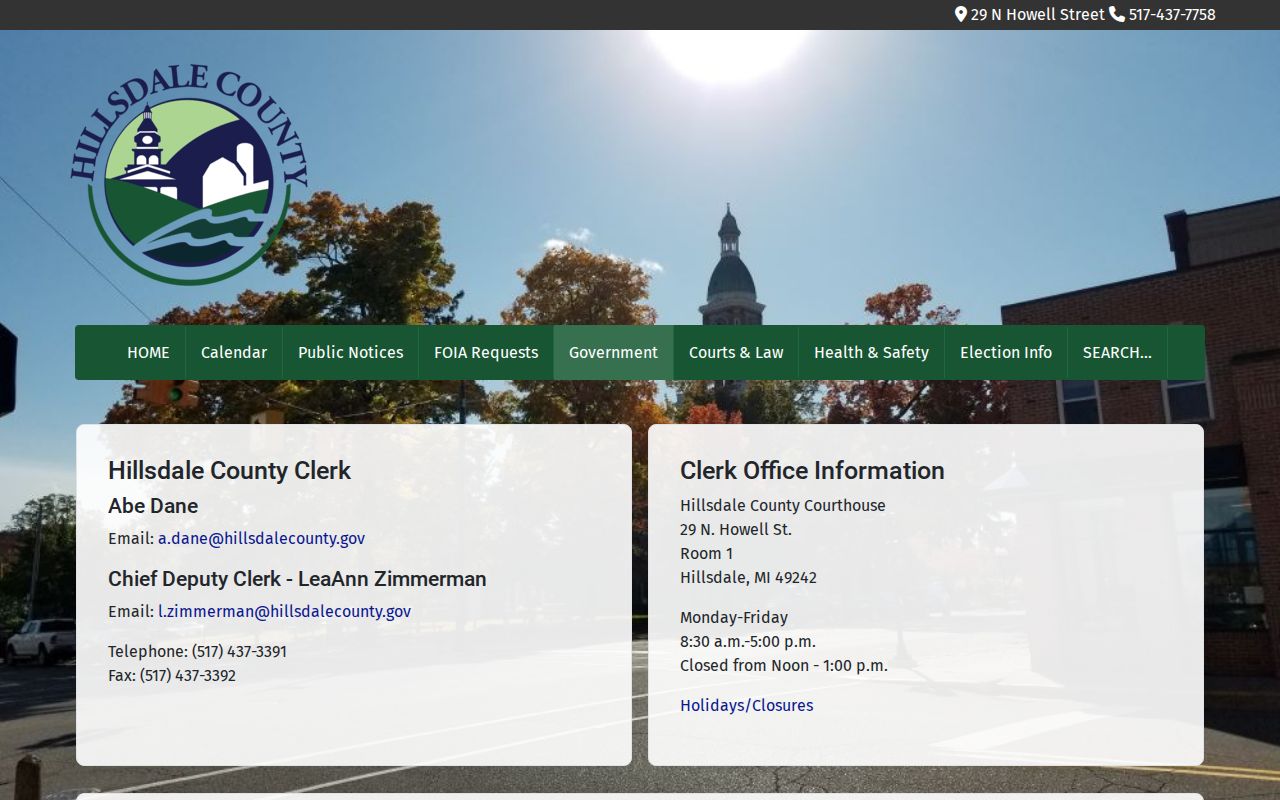 The Hillsdale fee panel distinguishes the work of locating a named case from the cost of making a copy.
| Hillsdale item | Published amount | Use |
|---|---|---|
| Criminal or civil case-name search | $10 per name | Locating a Hillsdale case when no number is supplied. |
| Other record copies | $1 per page | Reproducing a Hillsdale court record. |
| Certification | Ask the custodian | Fee and procedure depend on the Hillsdale document and court. |
Hillsdale Court Records Privacy
Public access does not make every field public. MCR 1.109 spells out protected personal information: dates of birth, national identifiers, driver-license or state-ID numbers, passport numbers, and financial-account numbers. A Hillsdale public copy may arrive with redactions. Redaction means protected information was removed or masked. It does not mean the Hillsdale case itself is sealed.
The official Michigan Court Rules Chapter 8 page is the access source for Hillsdale court files. 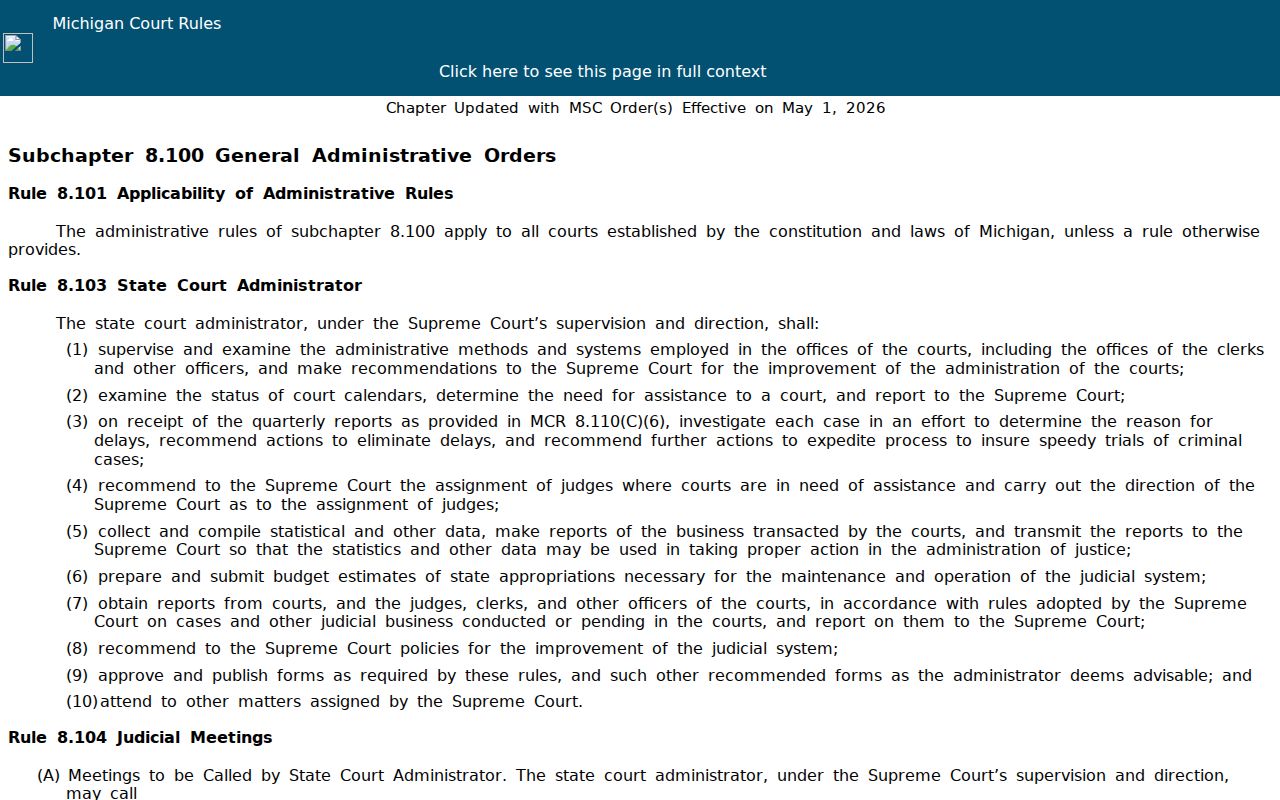 The Hillsdale request should omit unnecessary identifiers and seek the public version that the rule permits.
Public Access and Sealed Records
MCR 8.119 opens most Hillsdale public case records to inspection and copying. A restriction can still apply. The rule goes further. It also makes each court adopt its own access procedure. Keep three conditions straight when you work with a court file. A redacted public copy blacks out protected details. But it stays open. Restricted or nonpublic material is limited by a rule or statute. A sealed record is closed by court order or legal authorization. None of them is an invitation to work around the restriction.
Key Hillsdale access rules:
MCR 8.119 permits inspection and copies of public court records, sets the local access-procedure baseline, and addresses sealing and reproduction.
MCR 1.109 addresses filing privacy and protected personal information that can be redacted from a Hillsdale public copy.
MCL 600.1988 is the reproduction-fee statute referenced by the court-record rules.
Hillsdale Court Records FOIA Boundary
Skip FOIA for a Hillsdale court file. That is not the normal route. MCL 15.231 sets the state's public-records framework, but it covers specific public bodies, and the County FOIA policy excludes the courts as well as the County Clerk acting as circuit clerk. For judicial files, follow the Hillsdale court access procedure instead. A county FOIA request still fits one purpose: covered Hillsdale County administrative records held by a covered public body.
The official Michigan FOIA statute page identifies the statutory framework. 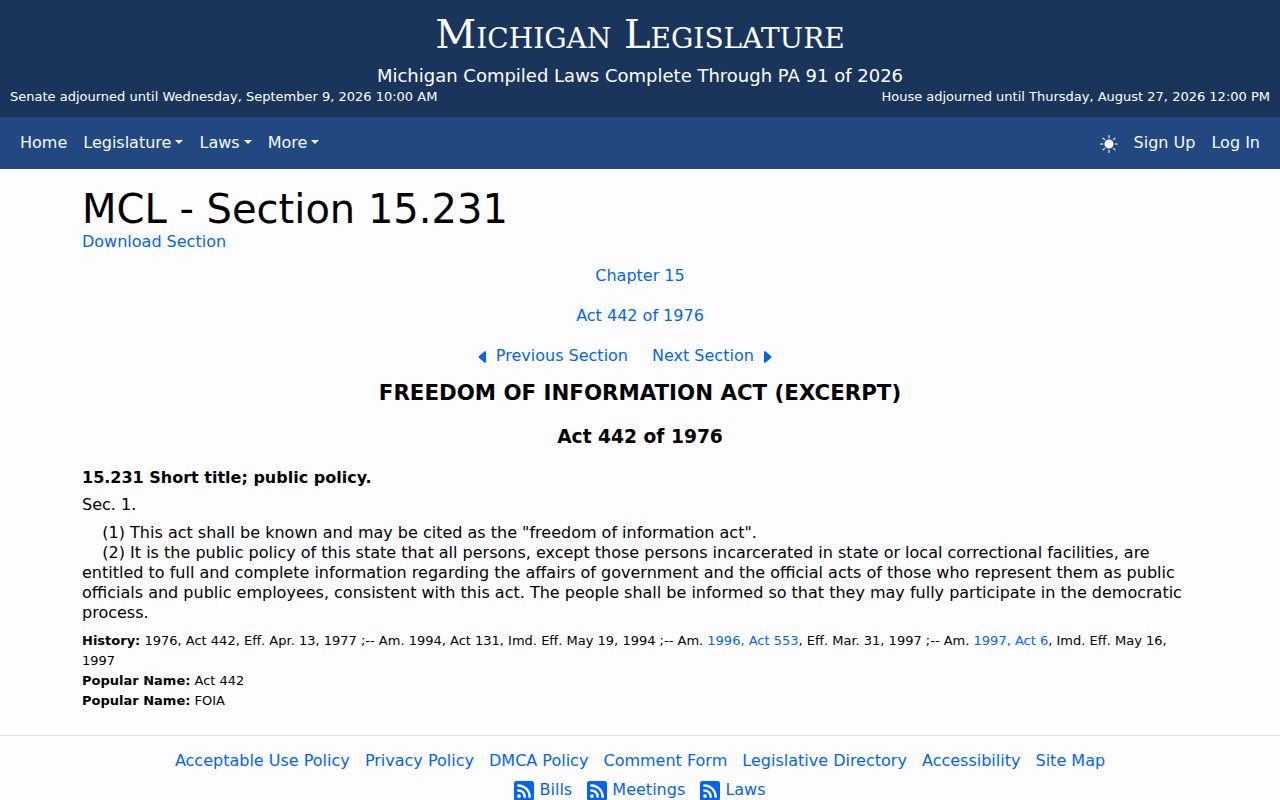 The Hillsdale distinction matters because a county form may look convenient but does not replace a request to the court custodian.
Hillsdale Court Records Certification
Name the document first. A Hillsdale certified record can cover a judgment, an order, a complaint, a docket history, or a probate register. Each may need different handling. When you contact the court, ask the Hillsdale custodian whether the item is available. Ask whether the public version needs redaction, what certification is offered, and the current fee. This matters most when a Hillsdale online history lists only a document title rather than the document itself. Older records can take a clerk inquiry. Transcript forms, archive turnaround times, and certification prices vary from court to court rather than following one schedule. The right Hillsdale office can give those case-specific details.
Hillsdale Court Records Follow Up
A Hillsdale public search that returns nothing does not mean the case does not exist. Check the court selection first. Then check the spelling of the name. Then consider whether the category is restricted or excluded from public display. Ask the right Hillsdale custodian about authorized access. MiCOURT itself warns that some older conviction information may not show in the public system. Public history is for locating a case. Need an actual court record? The Hillsdale clerk, district office, or probate register is the source. That split keeps each request with the court that legally maintains the file.
Hillsdale Court Records Procedures
Access to a Hillsdale court record follows whatever procedure the keeping court has adopted. Under MCR 8.119, looking at public case history or inspecting a public document is generally free. Reproduction fees can apply under MCL 600.1988. That is why viewing a Hillsdale public docket differs from receiving a copy. Ask the Hillsdale custodian which method fits your file. The options include inspection, self-copying, staff reproduction, or another current choice. A court procedure never removes a valid restriction. Hillsdale staff may hand you a redacted copy. They can also explain an authorized-access path, or decline to release protected information. A narrow request for a public record remains the clearest route.